Kasol has no shortage of places to stay. But only a few places feel like they belong to the valley rather than merely operating inside it. Sood Homestay is one of those places.
This is not the language of a giant hotel chain, and that is exactly the point. Sood Homestay presents itself as a family-run Kasol base where mountain views, warm hosting, direct communication, and practical local guidance matter more than polished emptiness. On the main site, the promise is clear from the first screen: a stay shaped by real people, not generic inventory.
If you are planning Kasol well, that difference matters. The right stay in Parvati Valley does more than give you a bed. It changes your rhythm. It helps you wake up better, plan smarter, rest properly, and move through the valley with more confidence. That is where Sood Homestay feels genuinely grand — not in an overdesigned or artificial way, but in a deeply satisfying, memorable, mountain-hospitality way.
A grand Kasol stay, but in the right sense
Some properties try to look grand with noise: overstatement, inflated claims, and décor that photographs better than it lives. Sood Homestay's appeal is more mature than that. Its grandeur comes from atmosphere.
It comes from the fact that you are staying in a home-led place with real local presence. It comes from the terrace where a slow cup of chai actually feels like part of the destination. It comes from rooms that look restful instead of decorative. It comes from being able to message the host directly when you need help with dates, trek ideas, arrival timing, or simple valley logistics.
That is a far more useful kind of luxury in Kasol than empty showmanship.
The first impression: grounded, warm, and unmistakably local
The main Sood Homestay site positions the property as a family-run homestay in Kasol, Himachal Pradesh, with direct WhatsApp contact, local trek guidance, and a mountain-view terrace. Even before you arrive, that creates a different expectation from a generic booking page. You are not entering a funnel. You are starting a conversation.
The photo set on the main site reinforces the same message. You see real spaces: the homestay building lit up after dark, guest rooms with personality and daylight, and the terrace lounge that gives the property much of its emotional identity. The result is reassuring because the visuals feel lived-in and honest.
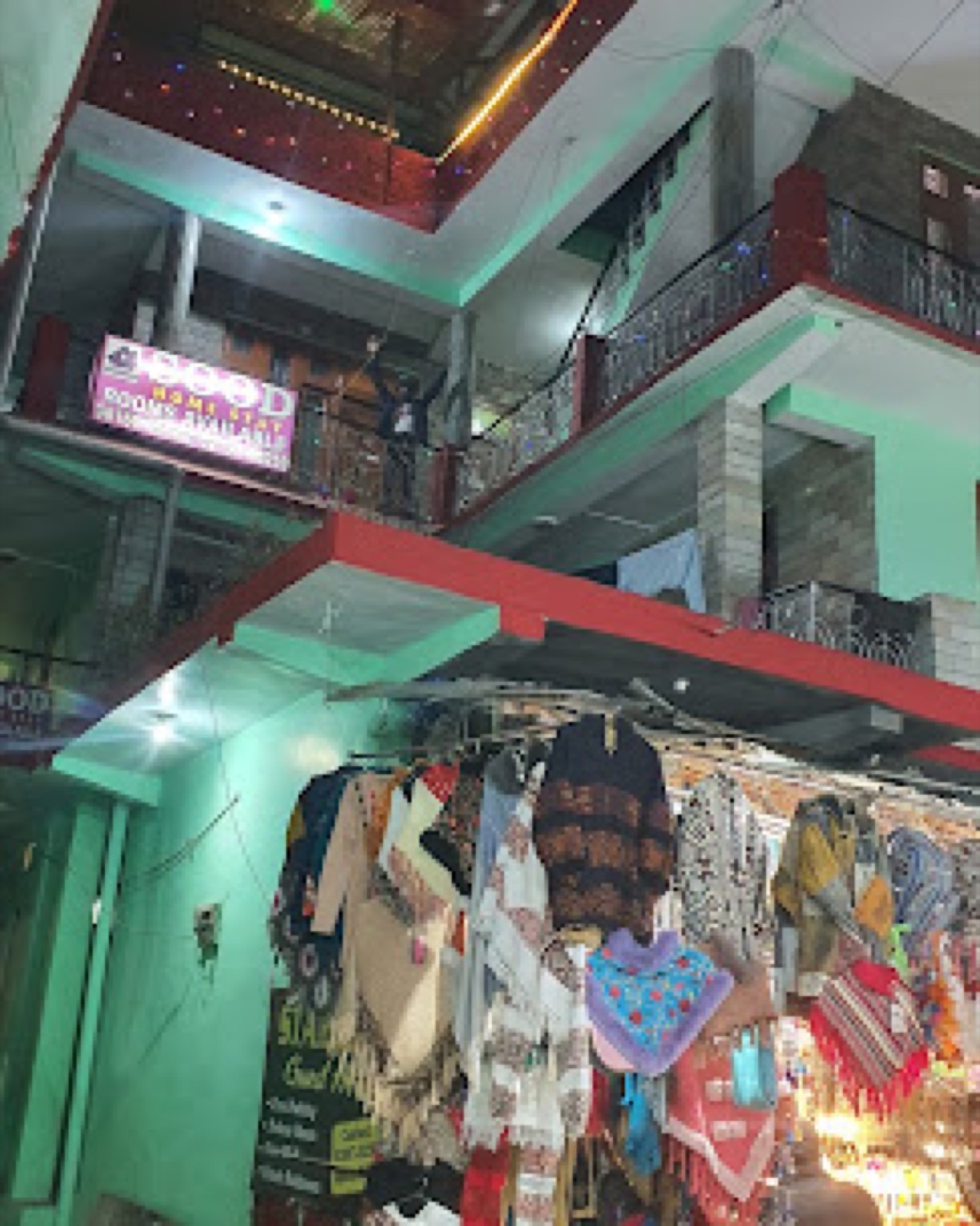
The site also highlights practical details that matter after a long road journey or trek day: visible signage, guest floors above the street-level frontage, and amenity cues around parking and hot and cold water. These are not glamorous details, but they are exactly the details that make guests feel settled quickly.
The terrace is one of the property's biggest strengths
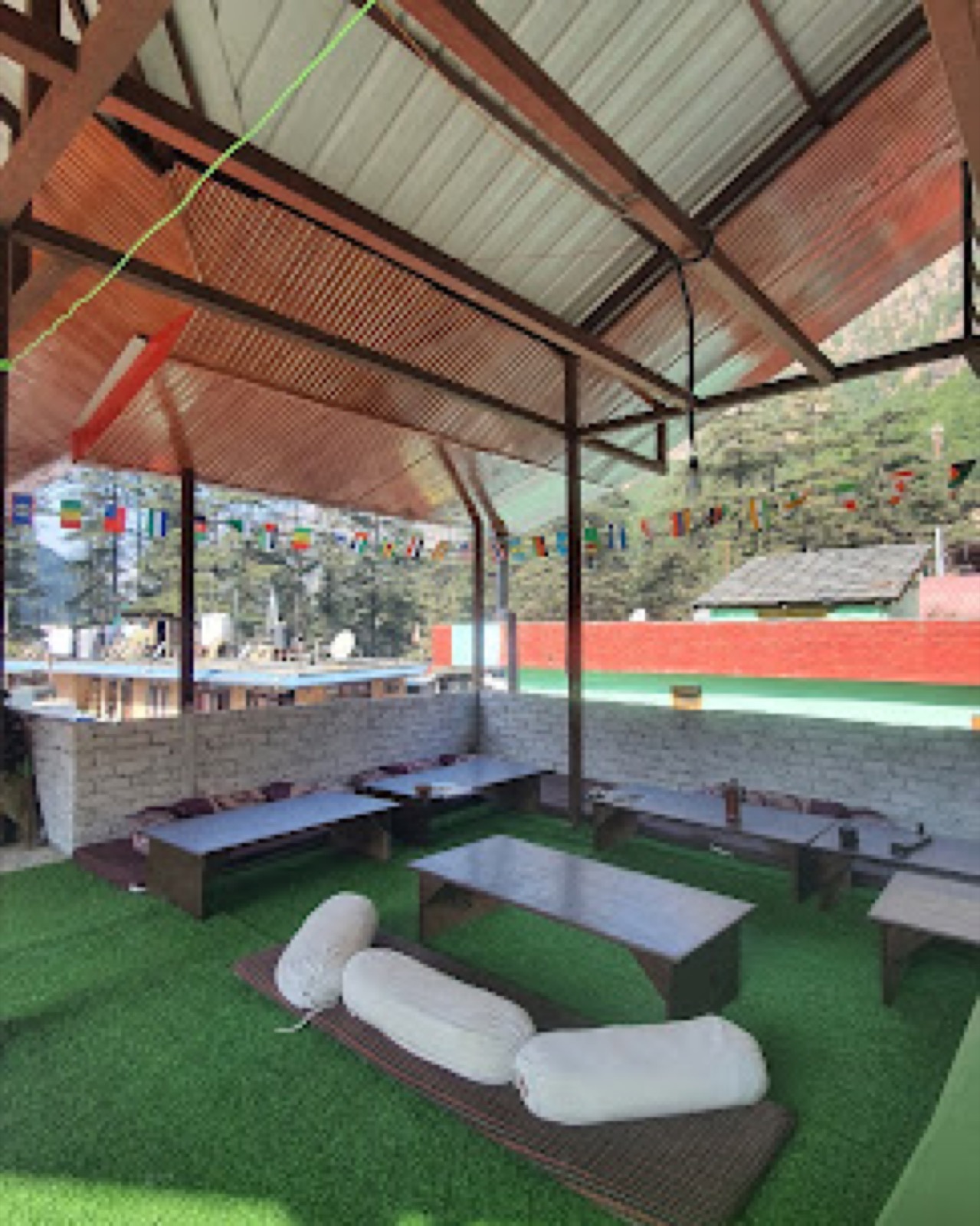
If one image gives Sood Homestay its own personality, it is the terrace.
The main site describes and shows an open-air terrace lounge with low wooden tables, floor cushions, and a covered roofline. This is more than a decorative extra. In Kasol, shared spaces shape the memory of a stay almost as much as the room itself. A good terrace gives you a morning ritual, an evening decompression zone, a planning corner, a conversation space, and a weather-watching perch all at once.
At Sood Homestay, the terrace reads like a place built for exactly the kind of traveller Parvati Valley rewards: someone who wants to slow down just enough to notice where they are.
It is easy to imagine several versions of a great day beginning or ending there:
- a pre-trek tea with maps and layered clothing spread across the table
- a late breakfast after sleeping in from a previous day's hike
- an evening conversation about Kheerganga, Tosh, cafés, road conditions, and whether tomorrow should be active or quiet
- a solo hour with no agenda except mountain air, roofs, trees, and soft valley light
That is why the terrace feels important. It turns the stay from accommodation into experience.
Rooms that feel comfortable rather than performative
The room presentation on the main site is another strength. Instead of selling fantasy, the photos and copy suggest cozy, practical, private comfort. Warm wall tones, soft daylight, clean bedding, simple wooden furniture, curtains that diffuse the light, and enough visual calm to help you reset after a long day — these details matter enormously in mountain travel.
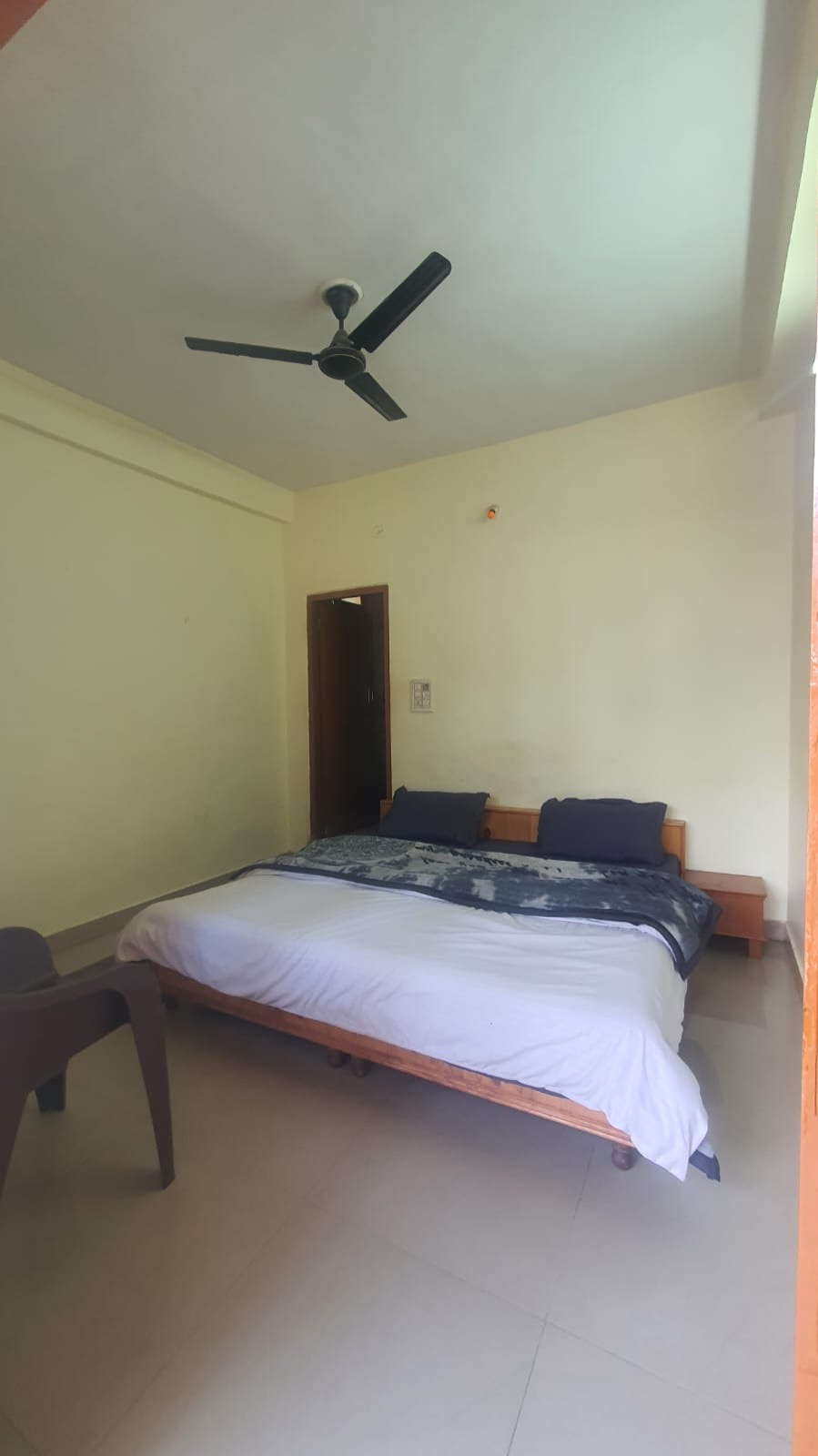
There is also something psychologically reassuring about rooms that do not try too hard. After treks, travel delays, café-hopping, or road fatigue, you do not need theatrical luxury. You need a room that helps your nervous system settle. The site copy gets that right. It frames the rooms as cozy, restful, and easy to return to.
Another room shown on the site leans even further into minimal calm: white bedding, a clean headboard, tiled floors, ceiling fan, and an airy no-fuss arrangement.
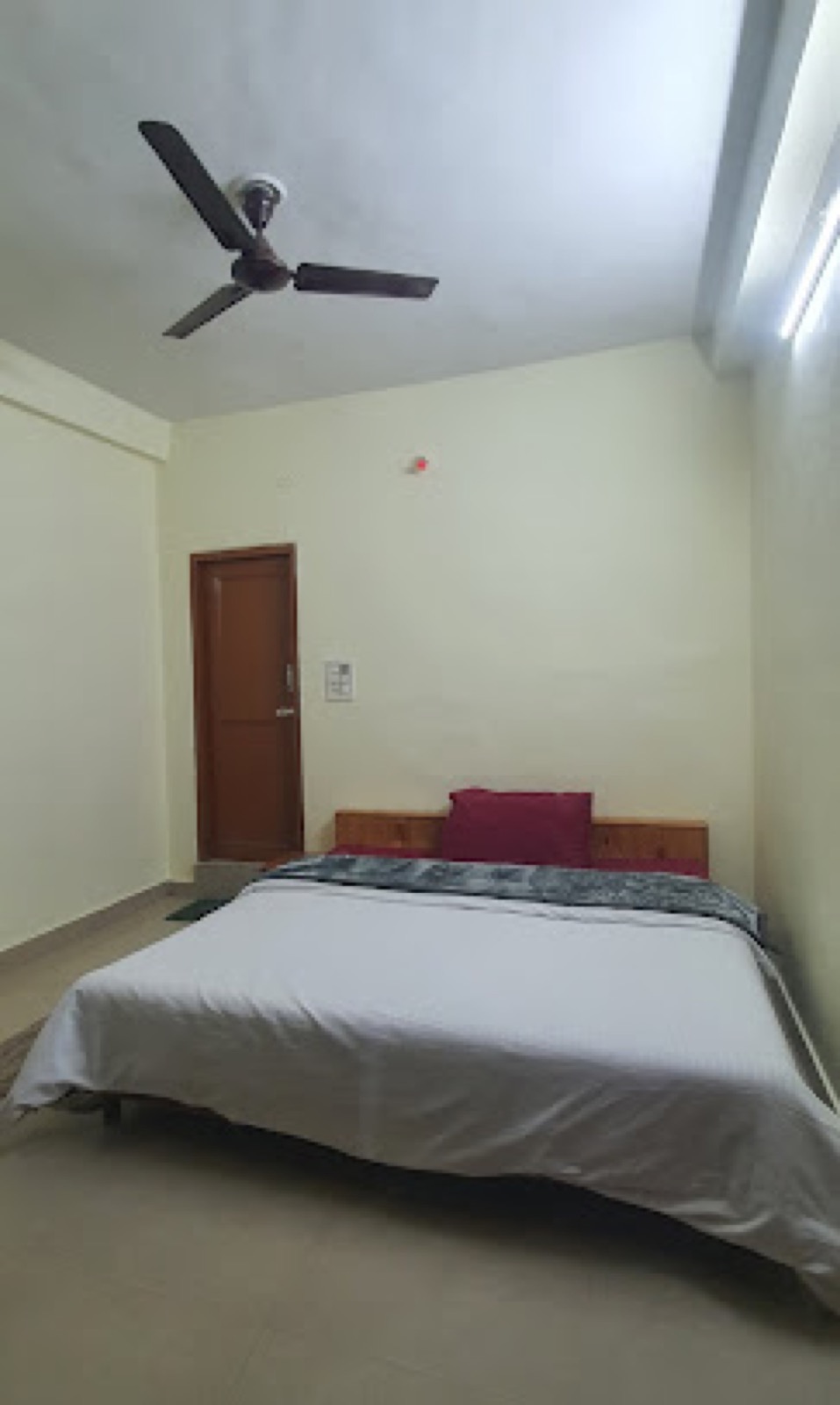
For many guests, this is exactly what makes a stay feel premium. When a room is simple in the right way, your attention shifts back to why you came to Kasol in the first place.
Why family-run hospitality matters more in Kasol than in many destinations
In large cities, a hotel can get away with being purely transactional. In Kasol, that model is weaker.
Parvati Valley is a place of changing road conditions, changing weather, changing energy, and changing plans. Travelers often arrive tired, under-packed, overexcited, uncertain about the next day, or all four at once. A family-run homestay can respond to that much better than a faceless property can.
The Sood Homestay site explicitly leans into this strength. It talks about warm host-led stays, local recommendations, and quick direct contact. It emphasizes that guests can discuss dates, room options, and travel context directly instead of guessing through a static pricing grid.
That is not just a branding preference. It is a better system for this kind of destination.
Host Hukum gives the place its human identity
A property becomes memorable when its hosting has a face, a tone, and a point of view. For Sood Homestay, that figure is Hukum.
The main site's host section presents Hukum as more than an operator. He is described as a local guide presence, a calm practical helper for guests, and also a creative personality with a distinct artistic practice. That combination is compelling. It suggests someone who understands both logistics and atmosphere — which is actually a rare and valuable mix in hospitality.
The host page paints a memorable picture: hospitality by day, miniature art by passion. Guests are encouraged to see Hukum as someone who can help with valley decisions, trek planning, and the human side of staying in Kasol, not merely check-in formalities.
That matters because travellers remember tone. They remember whether the person guiding them felt rushed, generic, and disengaged — or whether they felt steady, useful, and real. Everything in the site copy suggests Sood Homestay wants to belong to the second category.
If you want to understand the property's identity more deeply, the main site's host page is worth exploring.
Good for rest days, and even better for trek days
Sood Homestay is especially compelling because it works for two different Kasol moods at once.
1. It works for quiet travellers
If you want Kasol as a place to slow down, read, rest, recover, sit on a terrace, eat simply, and move at your own speed, the property layout and tone support that very well.
2. It works for active valley travellers
If you are using Kasol as a base for Parvati Valley treks, the site becomes even more persuasive. The main site's SEO and expedition sections specifically position Sood Homestay as a useful launch point for Kheerganga, Sar Pass, and other Parvati Valley routes, with host-led coordination and practical route guidance.
That means you are not choosing between a comfortable stay and a trekking-friendly stay. You are getting both in one base.
The expeditions section on the main site makes this especially clear. It frames the property not just as accommodation, but as part of a larger local travel ecosystem: trek briefings, fitness-appropriate suggestions, preparation help, and realistic planning.
The booking model is refreshingly direct
One of the strongest decisions on the Sood Homestay site is that it does not overcomplicate booking.
Instead of turning the guest experience into a long impersonal flow, the site repeatedly encourages direct contact by WhatsApp or phone. It also explains why public nightly rates are not the core experience here: actual value depends on dates, room choice, season, and stay length, so guests are invited to message for a clear quote.
That approach suits Kasol very well. It lets travellers ask the questions they really have, such as:
- Which room is best for my group?
- Are the dates realistic in this season?
- Is this a better trip for rest, treks, or both?
- Can we use the homestay as a base and decide activities after arrival?
- What should we prioritize if we only have two or three days?
This is part of what makes the property feel premium. Direct access to useful human judgement is a better service than automated friction.
Value-first, not cheap-feeling
The site's language around pricing is smart. It positions Sood Homestay as budget-friendly and value-first, but without sounding cut-rate.
That distinction is important.
There is a big difference between a stay that is merely cheap and a stay that gives excellent value because it understands what guests need. The site copy suggests the second model. It emphasizes that guests can expect a clear quote and transparent discussion of what is included, while also reinforcing that typical inclusions may cover WiFi, hot shower, linen, and local travel tips.
That is exactly the sort of value proposition that makes sense in Kasol. Travellers want affordability, yes — but they also want trust, responsiveness, and a stay that feels worth recommending afterward.
Real spaces photograph better because they live better
One subtle strength of Sood Homestay's visual identity is that the photos look believable.
That may sound small, but it has real marketing power. Over-curated stays often disappoint because their photos are more idealized than usable. Here, the photographs suggest spaces that will likely feel familiar when you arrive.
The lit night façade implies easy recognition after dark. The room photos suggest comfort without surprise. The terrace photo communicates a genuine social and atmospheric asset. Together, these images tell a consistent story.
That consistency builds trust.
Review snippets support the same impression
The main site includes brief guest feedback. One review mentions that the owners were super friendly and helped with scooter rental. Another highlights cozy beds and friendly staff. These are short comments, but they say a lot.
They reinforce the exact things the site is trying to signal:
- hosting that feels helpful, not distant
- comfort that matters in daily use
- a guest experience shaped by practical support, not empty polish
For a homestay, those signals are more persuasive than exaggerated praise.
What kind of traveller will love this place most?
Sood Homestay is especially strong for guests who want one or more of the following:
A real Kasol base
Not just a place to drop bags, but a place that adds to the trip's emotional quality.
Direct host contact
Useful if you prefer clear communication over platform confusion.
A terrace lifestyle
If terrace time is part of how you travel — chai, planning, reading, slow evenings — this matters a lot.
Trek flexibility
Excellent for guests who want to pair rest with day hikes or more structured valley trekking.
Family-run warmth
Better for travellers who like local accountability, practical guidance, and a sense of being hosted rather than processed.
A sample Sood Homestay-style Kasol day
To understand why this property works, imagine a typical day built around its strengths.
You wake in a quiet room with filtered mountain light. You move slowly because you can. Tea comes before urgency. On the terrace, the air is cool enough to make staying still feel productive. Someone in your group is checking trek options. Someone else is deciding whether today should be a river walk, café day, or Kheerganga start. You ask a practical question. You get a useful answer.
By mid-morning, Kasol opens around you. You step out with a better plan than the one you had last night. You return in the evening with mountain tiredness instead of decision fatigue. Then the terrace becomes valuable again. The day closes gently.
That is the kind of cycle a good homestay enables.
Why this article is comfortable making a strong recommendation
There are properties that look attractive online but reveal very little about how they actually host. Sood Homestay is not one of them. The main site offers enough tone, structure, and visual evidence to support a confident impression.
Here is what stands out most clearly:
- the property understands its role as a Kasol base, not just a room seller
- the terrace is a genuine experience asset
- the rooms look private, cozy, and travel-friendly
- the host identity is strong and memorable
- direct WhatsApp-led booking makes sense for this destination
- the stay is positioned intelligently for both quiet travellers and trekking guests
All of that adds up to something rare: a homestay that feels both approachable and elevated.
Final word: Sood Homestay feels like the Kasol version of grand hospitality
If you define grand only as lavish, you may miss what makes mountain hospitality special. In Kasol, grandeur can mean warmth without noise, views without pretension, comfort without stiffness, and local knowledge without performance.
That is the version of grandeur Sood Homestay seems to offer.
It feels like a place where the valley is still allowed to be the main character, while the stay quietly makes that valley easier to enjoy. For many travellers, that is the smartest and most memorable luxury of all.
If you want to continue from reading to planning, the simplest next steps are the main Sood Homestay site, the host page, and the trek expeditions guide.